Throughout my education, I was taught that manual therapies are the superior modality and are often the most effective treatment option available. During my clinical placements and as I progressed into professional practice, I began to appreciate this more fully, consistently observing the difference in tissue quality, movement and comfort before and after the application of manual therapy.
Before discussing the benefits of massage, it is helpful to understand the basic anatomy of skeletal muscle. Muscles cross joints and function by contracting and relaxing to produce movement, such as flexion or extension. At a microscopic level, muscle fibres contain two important proteins: actin and myosin.
Myosin has finger-like projections, while actin contains binding sites that these projections attach to. During muscle contraction, the myosin projections bind to the actin and, using energy, pull along the actin filaments. This action shortens the muscle fibre, resulting in contraction and movement at the joint. When the muscle relaxes, the filaments slide back to their resting position.
Understanding this process helps explain why manual therapies can have such a noticeable effect on muscle function. By influencing muscle tone, circulation, tissue mobility and comfort, techniques such as massage can help muscles move and function more efficiently.
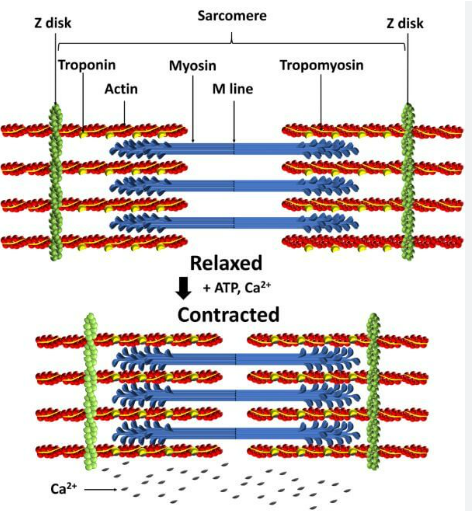
Image: Biology Dictionary, 2026
Now that we understand the basic anatomy of a muscle, what happens when things are not functioning as they should?
A tight muscle is often described as a muscle with increased tone. This means the resting tension within the muscle is higher than normal, commonly as a result of abnormal movement patterns, overuse, compensation, pain, or injury. Muscles with increased tone may also develop muscle spasm and adhesions.
A muscle spasm is a sudden, involuntary, and often painful muscle contraction that cannot be consciously controlled. Spasms are frequently associated with increased muscle tone and can further restrict movement and comfort.
Adhesions are localised areas of tightness within the muscle or surrounding connective tissue. They can develop following injury, inflammation, prolonged tension, or repetitive strain, and they reduce the normal flexibility and glide of the tissue. When muscle fibres and connective tissue do not move freely, the muscle may feel stiff, shortened, and less functional.
This is where manual therapy can be particularly beneficial. Techniques such as massage and stretching aim to reduce excessive muscle tone, relieve spasm, improve tissue mobility, and restore more normal movement patterns.
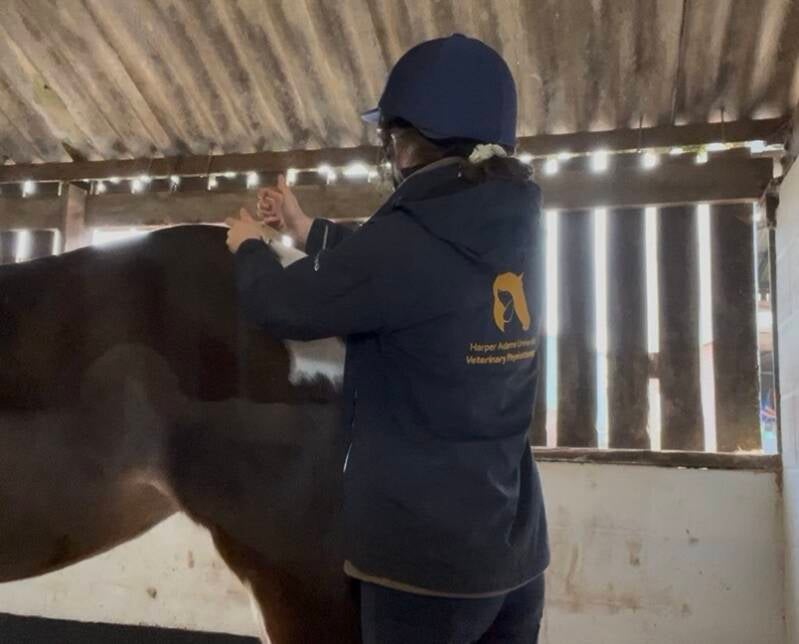
So, what are manual therapies?
Manual therapies are hands-on treatments that use the practitioner’s hands to influence muscles, fascia, and joints with the aim of creating a positive change in tissue function, comfort, and movement. Common examples include massage and stretching. Different massage techniques are selected depending on the clinical presentation and treatment goals.
Effleurage
Effleurage is usually performed at the beginning and end of a treatment session. It involves long, gliding strokes applied in the direction of the muscle fibres. The primary aims are to increase circulation, gently warm the tissues, improve tissue mobility, and prepare the muscle for deeper techniques.
When performed more superficially, effleurage also provides a calming sensory stimulus that may encourage relaxation and the release of endorphins, the body’s natural pain-relieving chemicals. This can be particularly helpful for animals with chronic pain or for older patients that may not tolerate deeper massage techniques.
Compression
Compression is another technique I use frequently. It involves applying sustained pressure to a specific point within the muscle, typically for around 10–30 seconds depending on the tissue response. The pressure temporarily reduces local blood flow; when the pressure is released, blood returns to the area, which may help improve circulation, reduce muscle guarding, and encourage tissue relaxation. Clinically, compression is often useful for areas of increased tone and localised muscle tension.
Percussion massage techniques
Percussion massage techniques, such as hacking and cupping, are more stimulatory in nature. These rhythmic tapping movements can increase sensory input, stimulate local circulation, and help activate tissues that appear underactive or reduced in tone. They are generally used selectively and are not appropriate for every patient.
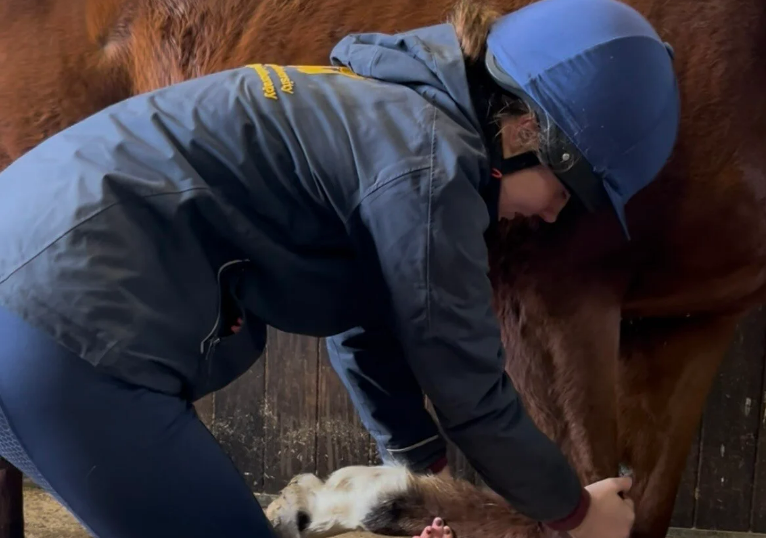
Stretching
Stretching should never be performed on a cold muscle, as this may increase discomfort and the risk of tissue strain. For this reason, stretching is usually carried out after exercise or following massage, when the tissues are warmer and more pliable.
After massage, improved circulation and tissue relaxation may allow a stretch to be applied more comfortably and effectively. When held for an appropriate duration, stretching can help improve muscle length, flexibility, suppleness, and overall range of motion, while also assisting in the reduction of excessive muscle tone.
In practice, I often find that the greatest benefit comes from combining massage and stretching rather than using either technique in isolation. Massage helps prepare the tissues, while stretching helps maintain the improved mobility achieved during treatment, creating a more lasting functional change for the animal.
Now to look at the literature:
- The most pivotal research in equine science was conducted back in 2002. This study used a small sample of horses who receive 20 minuets of massage consisting of compression and friction. Stride length measures on a treadmill shown that after the massage treatment stride length was increased by 4.8 inches in walk and 1.7 inches in trot (Scott and Swenson, 2009 and Maler, 2023).
- Another study used 10 mature horses to investigate skin temperature following sports massage to indicate an increase in blood flow to the area. Findings concluded a significant increase in skin temperature for as long as 60 minuets post massage. Therefore, this indicates that massage has a longer carry over period and still takes affects up to 60 minuets after treatment. Therefore, supporting the idea that massage improves circulation and recovery in horses (Salter et al., 2011).
- A sample size of 30 horses competing in three different discipline; dressage, endurance and saddlebred each recieved weekly sessions of 40 minuet massage for 5 consecutive weeks. Findings were able to conclude that median values all shown imporvemnts within shoulder flexibility (Badenhorst, Fourie and Vosloo., 2017).
- Finally, studies have shown that stretching in horses increases joint Range of Motion without increasing soreness, which could be a possibly from intense exercise. These are similar to human studies that found regular stretching can improve jump height and running speeds (Frick, 2010)
In conclusion, this rapid literature review supports many of the points discussed above regarding the potential benefits of manual therapies. Techniques such as massage and stretching may provide therapeutic benefits for a wide range of veterinary patients by improving comfort, tissue mobility, and overall function.
However, it is important to acknowledge that the veterinary literature in this area remains relatively limited. While there is a substantial body of research investigating manual therapies within human medicine, veterinary-specific evidence is less extensive. This highlights the need for further high-quality research to better understand the effectiveness of manual therapies in animal patients and to continue strengthening evidence-based veterinary physiotherapy practice.
References
Biology Dictionary (2026) Actin and Myosin. Available at: https://biologydictionary.net/actin-and-myosin/ (assessed 28.7.26)
Frick, A., 2010. Stretching exercises for horses: are they effective?. Journal of equine veterinary science, 30(1), pp.50-59.
Maler, M., 2023. Massage therapy and myofascial principles. Integrative Veterinary Medicine, pp.63-69.
Salter, M.M., McCall, C.A., Pascoe, D.D., McElhenney, W.H. and Pascoe, C., 2011. Effect of equine sports massage therapy on cutaneous temperature. Journal of Equine Veterinary Science, 31(5-6), pp.322-323
Scott, M. and Swenson, L.A. (September 1, 2009). Evaluating the benefits of equine massage therapy: a review of the evidence and current practices. J Equine Vet Sci 29 (9): 687–697
Create Your Own Website With Webador